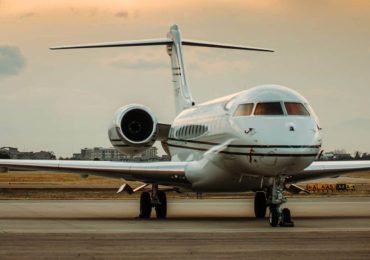
There is a question that comes up almost every time private aviation enters a conversation: what does it actually cost?
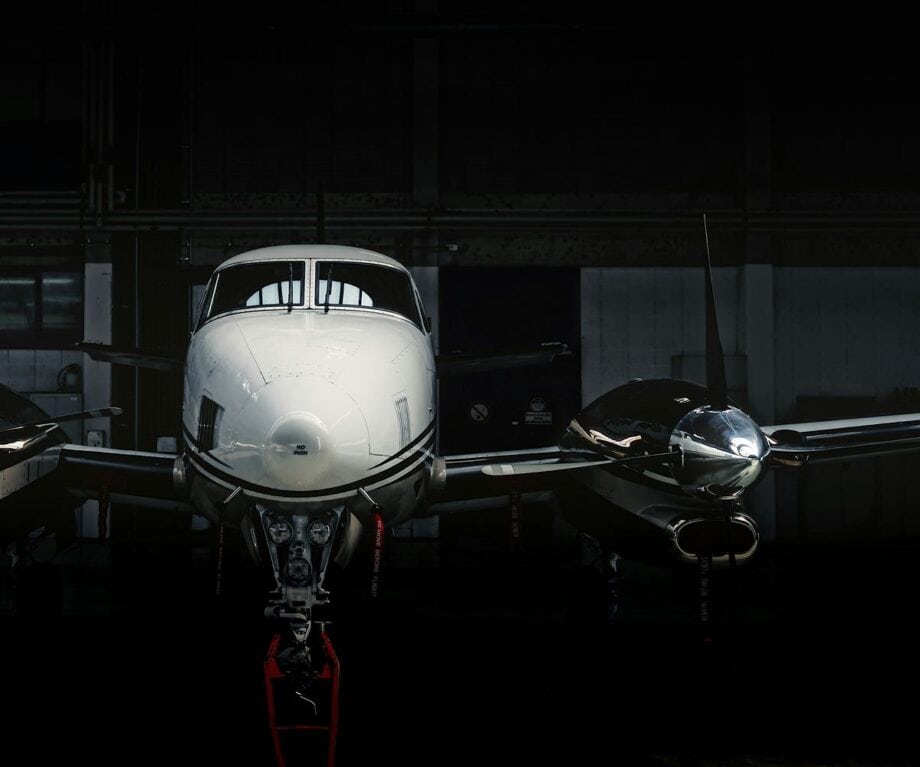
It sounds as though there should be a straightforward answer. A flight has a departure point, a destination and a distance, so surely there ought to be a reasonably predictable price attached to it. Yet ask for a private jet from London to Nice on three different dates and you may receive three very different quotations.
That can be confusing, particularly for someone chartering for the first time. The reason is that a private flight is priced very differently from a scheduled airline ticket. You are not buying one seat on an aircraft that would have flown anyway. You are effectively arranging the movement of an entire aircraft and crew around your journey.
Where that aircraft is before it collects you matters. Where it needs to go afterwards matters. The time of year matters, as do the airports, the number of passengers, the amount of luggage and sometimes something as simple as whether you are willing to leave at 11.00 rather than 10.00.
Once you understand that, private jet pricing becomes considerably less mysterious.
For many popular journeys within Europe, a one-way charter can fall somewhere between approximately €5,000 and €15,000 for the whole aircraft, although larger aircraft, longer sectors and difficult peak dates can push the price well beyond that range.
A London to Nice flight, for example, might be around €5,000 to €9,000 one way under normal conditions. London to Ibiza can fall in the region of €6,000 to €12,000, while Geneva to Mykonos might be somewhere around €7,000 to €13,000.
Those are useful indications, but they are not fixed fares. On the wrong Friday afternoon in August, with limited aircraft availability and a difficult positioning requirement, the same journey can cost considerably more.
And that is really where the story of private aviation pricing begins.
You are paying for the aircraft before it reaches you as well
Imagine that you want to travel from London to Nice.
There happens to be a suitable Citation sitting at Farnborough. Its crew is available, the aircraft has no awkward positioning requirement and perhaps it even has another passenger booked from the South of France later that day.
For the operator, your flight fits neatly into the aircraft’s schedule.
Now imagine requesting precisely the same journey twenty-four hours later. This time there is no appropriate aircraft in London. The closest suitable one is in Paris.
Before you can travel from London to Nice, the aircraft has to fly empty from Paris to London.
To you, the journey is still London to Nice. Operationally, however, the aircraft has flown Paris to London to Nice. That extra flight has a cost, whether it appears explicitly on the quotation or is incorporated into the charter price.
This is known as positioning, and it is responsible for a surprisingly large amount of the variation in private jet prices.
It also explains why choosing an aircraft based purely on its hourly rate is rarely a good idea. A supposedly inexpensive jet sitting hundreds of miles away may ultimately cost more than a slightly more expensive aircraft already waiting at your departure airport.
The best-value aircraft is often not the one with the lowest hourly rate. It is the one that fits most efficiently into the journey.
This is one of the fundamental differences between private and commercial aviation. Scheduled airlines design a network and ask passengers to fit into it. Private aviation does almost the opposite: the network is rearranged around the passenger.
That flexibility is extremely valuable, but it also makes pricing much more dynamic.
The same route can be a very different flight in July
Seasonality adds another layer.
Private aircraft move around Europe in response to demand. During the summer months, a large part of that demand shifts towards the Mediterranean: Ibiza, Mallorca, Nice, Cannes, Olbia, Mykonos and other leisure destinations become considerably busier.
In winter, the pattern changes again as traffic moves towards Geneva, Sion, Innsbruck and other gateways to the Alps.
Then there are individual weeks when the market becomes exceptionally tight. The Monaco Grand Prix, Cannes Film Festival, major yacht shows, Art Basel and the World Economic Forum in Davos can all create intense concentrations of demand.
Ibiza on a quiet weekday in May is therefore a very different charter market from Ibiza on a Friday afternoon in late July.
The runway is the same. The distance is the same. The flight time is essentially the same. What has changed is the availability of aircraft, parking, slots and crews.
That is why a figure such as “London to Ibiza from €6,000” needs context.
Under efficient conditions, such pricing can exist. A midsize or larger aircraft at a peak time, however, may cost considerably more. If several passengers are travelling with large amounts of luggage and the aircraft has to be brought in from elsewhere, the original starting price quickly becomes irrelevant.
I generally find realistic ranges much more useful than headline “from” prices. A starting price tells you what can happen when everything lines up perfectly. A range gives you a better idea of what you should actually budget.
London to Nice is a good example of when private flying works
London to Nice is one of the classic European private aviation routes, and it demonstrates quite well why people charter aircraft even when there are perfectly good scheduled services between the two cities.

The actual flying time is just under two hours. For a small group, there is usually little need for an enormous aircraft. A light or midsize jet can do the job comfortably, and under ordinary conditions a one-way charter can be around €5,000 to €9,000.
For one traveller, the financial comparison with a commercial flight is obviously difficult to make.
For six passengers, it becomes more interesting.
You are no longer comparing one airline ticket with one private jet. You are comparing the aircraft against perhaps six flexible Business Class fares, transfers, time spent navigating major terminals and, most importantly, the limitations of the airline schedule.
The private flight will still usually cost more. There is no reason to pretend otherwise.
But that is not necessarily the comparison that matters.
Suppose a family is leaving for the South of France with three children, twelve pieces of luggage and a dog. Or six executives need to leave immediately after a meeting rather than according to an airline timetable. Or the passengers are joining a yacht in Monaco that afternoon.
Now the value of the flight is not simply measured by the quality of the seat.
It is measured by what the journey allows them to do.
Private aviation is most compelling when it removes a practical problem. If there is no problem to solve, it can simply become a very expensive alternative to an airline.
Everything you need to plan your trip in 2026
.kb-row-layout-id200850_b13335-cf > .kt-row-column-wrap{align-content:start;}:where(.kb-row-layout-id200850_b13335-cf > .kt-row-column-wrap) > .wp-block-kadence-column{justify-content:start;}.kb-row-layout-id200850_b13335-cf > .kt-row-column-wrap{column-gap:var(–global-kb-gap-md, 2rem);row-gap:var(–global-kb-gap-md, 2rem);padding-top:var(–global-kb-spacing-sm, 1.5rem);padding-bottom:var(–global-kb-spacing-sm, 1.5rem);grid-template-columns:repeat(2, minmax(0, 1fr));}.kb-row-layout-id200850_b13335-cf > .kt-row-layout-overlay{opacity:0.30;}@media all and (max-width: 1024px){.kb-row-layout-id200850_b13335-cf > .kt-row-column-wrap{grid-template-columns:repeat(2, minmax(0, 1fr));}}@media all and (max-width: 767px){.kb-row-layout-id200850_b13335-cf > .kt-row-column-wrap{grid-template-columns:minmax(0, 1fr);}}
Choosing the right aircraft matters more than choosing the most impressive one
First-time charter clients understandably spend a lot of time looking at aircraft interiors.
The photographs are persuasive. One cabin is larger, another has beautiful leather seats, another resembles a small apartment. It is easy to assume that moving up an aircraft category must automatically produce a better journey.
For a short European flight, that often is not true.
There is relatively little benefit in chartering a Gulfstream for a 90-minute flight simply because a Gulfstream is an extraordinary aircraft. Unless there is a particular requirement for cabin space, baggage capacity or passenger numbers, a smaller jet may complete the mission just as comfortably for a fraction of the price.
Going too small can be equally unwise.
This is particularly noticeable on leisure flights. An aircraft may have seven passenger seats and technically accommodate seven people, but that tells you very little about whether it can accommodate seven people’s holiday luggage.
A group heading to the Alps may arrive with skis, boots and large suitcases. A family travelling to Mallorca for three weeks may have several pieces of luggage per person, a pushchair and children’s equipment. Golf trips present their own challenges, as do passengers travelling with pets.
Baggage capacity is not particularly glamorous, which is probably why it rarely features prominently in aircraft photographs. In practice, it is one of the first things I would check.
Range deserves the same attention.
The maximum range shown in an aircraft brochure does not necessarily mean that the aircraft can fly that distance in every real-world situation with every seat occupied and the baggage compartment full. Fuel, payload, weather, wind, runway length and temperature all affect the mission.
Geneva to Mykonos is a good example. The route is perfectly manageable for several aircraft categories, with current indicative one-way pricing around €7,000 to €13,000 depending on aircraft and conditions. But what is appropriate for three passengers with hand luggage may not be ideal for eight passengers travelling for a two-week holiday.
The objective should not be to find the smallest aircraft that can theoretically make the flight. It should be to choose the aircraft that makes sense for the people actually travelling.
Airport choice can matter almost as much as aircraft choice
Another reason private aviation prices can seem unpredictable is that the airport itself changes the economics.
London is an obvious example. Private flights can operate from Farnborough, Biggin Hill, Luton, Stansted and other airports depending on the mission. Paris has Le Bourget, arguably one of the best-known business aviation airports in Europe. Other cities have similar alternatives.
One airport may be much closer to where the passengers actually live. Another may have lower handling costs. A third may be open later, have better parking availability or simply have more suitable aircraft sitting on the ground.
A small change in airport can occasionally save thousands.
But it is important not to become obsessed with optimising the aircraft quotation at the expense of the journey.
If moving to another airport saves €1,500 but adds ninety minutes in the car, that may be a very poor trade for someone who is chartering precisely because time matters.
This is one of the reasons I prefer thinking about the entire journey rather than the flight in isolation.
Where is the passenger starting? Where are they ultimately going? What time do they actually need to arrive? Is there a helicopter transfer afterwards? A yacht departure? A meeting? A two-hour drive?
The aircraft is only one part of that chain.
Sometimes a more expensive flight produces a cheaper or much better overall journey.
Round trips are where the pricing becomes particularly interesting
A common assumption is that if London to Nice costs €7,000, then London to Nice and back should cost €14,000.
It may. But it could also work very differently.
Suppose you fly south on Friday and return on Sunday.
The aircraft could remain in Nice for the weekend. If it does, there may be parking costs, crew accommodation and minimum utilisation to consider.
Alternatively, the aircraft could drop you off and immediately continue elsewhere with another passenger. A different jet may then collect you on Sunday.
There is also the possibility that your outward or return flight fits neatly with another client’s itinerary. An operator might have an aircraft that needs to travel back towards London anyway, substantially improving the economics of your journey.
This is why it is often worth comparing a true round trip with two separate one-way charters.
If the stay is short, keeping the same aircraft and crew can work well. If you are going away for two weeks, it generally makes little sense to pay for an aircraft to sit waiting for you.
Private aircraft are working assets. The more efficiently an operator can use one around your journey, the better the potential price.
Empty legs are genuinely cheaper, but there is a reason
This leads naturally to empty legs, probably the most misunderstood part of private aviation.
The basic concept is simple.
An aircraft carries a passenger from London to Ibiza and subsequently needs to return to London. If nobody is booked on that return flight, the aircraft will reposition empty.
The operator would rather receive some revenue than none at all, so the empty sector may be offered at a substantial discount.
When the route and timing happen to match your plans, it can be an excellent opportunity. Discounts of several tens of percent compared with a normal charter are entirely possible, and in particularly favourable circumstances they can be considerably greater.
The important point is that you are receiving a discount because the flight is being driven by somebody else’s itinerary.
If the original passenger changes plans, the empty leg may change as well.
Its departure time can move. The aircraft can change. In some cases, the flight disappears entirely because the positioning requirement no longer exists.
For flexible leisure travel, that can be a perfectly acceptable compromise. If you fancy a weekend in the South of France and are happy to move your departure by a few hours, an empty leg can offer exceptional value.
If you absolutely must be in Zurich at 09.00 for a meeting, relying on somebody else’s repositioning flight is much less attractive.
Empty legs are best thought of as opportunities rather than cheap scheduled flights.
That distinction becomes even more useful now that technology can search large numbers of repositioning movements, nearby airports and flexible travel dates instead of requiring a traveller to manually inspect individual flights.
Flexibility is often worth more than negotiation
Perhaps the easiest way to improve a charter price is to give the person arranging the aircraft some room to work.
Consider two requests.
The first says:
“I need a jet from Farnborough to Nice at 10.00.”
The second says:
“There are six of us. We need to be in Nice by 14.00. Farnborough is preferred, but Biggin Hill or Luton would work, and we can leave an hour or two earlier if it makes a meaningful difference.”
Those are very different requests.
With the second, it becomes possible to consider an aircraft already sitting at another airport, a more efficient operator schedule, a repositioning movement or potentially an empty leg.
Quite often, an hour of flexibility can be worth more than a lengthy negotiation.
The same applies to travel dates. Flying on Thursday evening rather than Friday afternoon, or returning Monday morning instead of Sunday evening, can occasionally change the available aircraft market completely.
Naturally, there is no point being flexible if your schedule is not flexible. The purpose of chartering is, after all, to make the aircraft work around you.
But when price matters and the timetable allows it, I would always ask whether moving the time, date or airport produces a materially better option.
It costs nothing to ask, and the answer can be surprising.
So what should you actually budget?
For someone thinking about chartering within Europe in 2026, I would avoid starting with an hourly rate.
Instead, think in terms of the actual journey.
Short European sectors can sometimes be completed for €5,000 to €10,000 when a suitable aircraft is well positioned.
Popular routes of around two to three hours may often fall somewhere in the €7,000 to €15,000 region, although aircraft choice and peak demand can take them higher.
A larger midsize or super-midsize aircraft, a difficult positioning requirement or travel during one of the busiest periods can quickly push a European charter beyond €15,000 or €20,000.
Long-haul private aviation belongs to an entirely different price category. Once heavy and ultra-long-range jets are involved, flights costing €50,000, €80,000, €100,000 or more are perfectly possible.
But the important word throughout all of this is “can”.
A charter quote is not an airline fare. It is a snapshot of an aircraft market at a particular moment.
That is also why instantaneous technology has become useful in private aviation. Travellers increasingly expect to see aircraft options, indicative or bookable pricing and availability without beginning every journey with a succession of telephone calls and emails. Yet there remains value in having a human look at the mission, particularly when there are several possible airports, unusual luggage requirements, pets, complicated schedules or significant positioning costs.
The two approaches are not mutually exclusive. In many cases, they work best together.
When is flying private actually worth it?
For one passenger travelling from London to Paris, I would find it difficult to make a financial case for a private jet.
The Eurostar is excellent.
For a family of five or six travelling to an island with young children, luggage and a pet, the calculation is different. So is the calculation for a group of executives trying to visit two or three cities in a day, or for passengers joining a yacht whose departure cannot simply be moved because an airline connection was delayed.
The value is rarely just the cabin.
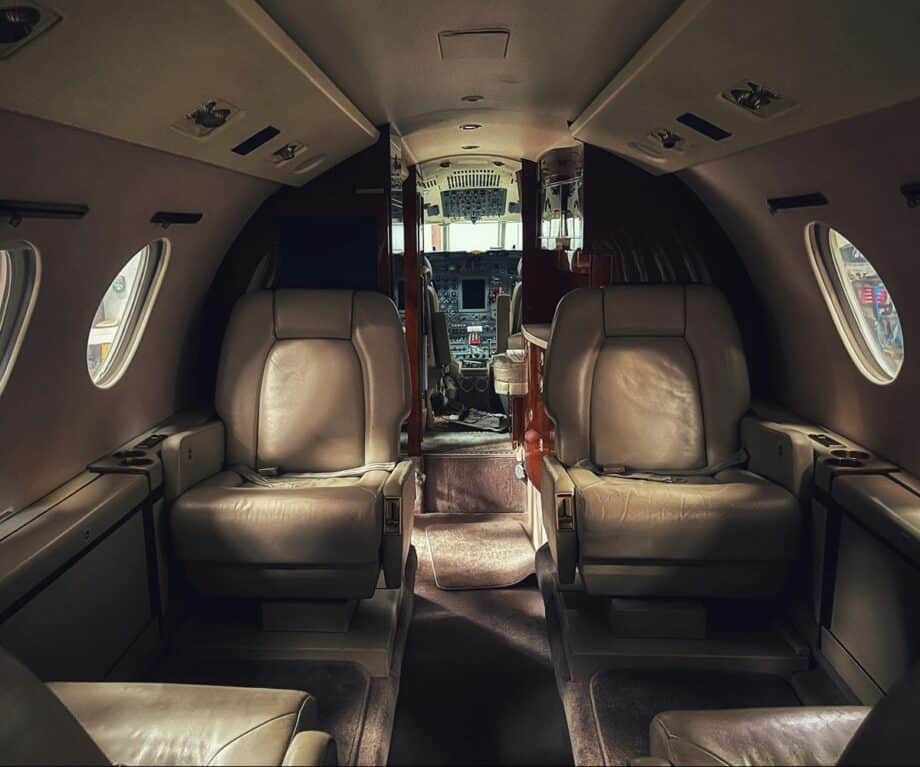
Commercial airlines can provide excellent cabins, very good food and comfortable seats.
What they cannot provide is the same degree of control over the journey.
Private passengers can choose airports that make sense for where they are actually going. They can often arrive shortly before departure. Their luggage stays with their group. Pets can frequently travel in the cabin. Departure times can be constructed around the day rather than the other way around.
For many people, that is what they are paying for.
The time saved in the air itself may be modest. The time saved around the flight can be enormous.
A passenger may avoid crossing a major airport, making a connection, staying an extra night in a hotel or reorganising an entire day around an airline schedule. A family may turn what would otherwise have been six or seven hours of travel into a relatively simple two-hour flight.
Sometimes that is worth the premium. Sometimes it quite clearly is not.
Private aviation does not make every journey better simply because it is private.
It makes certain journeys dramatically better because it removes the parts that make them difficult.
Before booking, ask the boring questions
The aircraft photographs are the enjoyable part. The practical questions matter more.
I would want to know the aircraft type rather than simply being told “light jet” or “midsize jet”. I would want the quotation to make clear what is included and under what circumstances additional charges could arise.
I would discuss luggage properly, particularly for families, ski trips, golf holidays and longer stays.
I would also ask what happens if the aircraft develops a technical problem. These are sophisticated machines and occasionally they become unavailable. What matters is how the operator and booking company deal with the situation and how a replacement aircraft would be arranged.
For anyone considering an empty leg, I would make sure the flexibility and cancellation implications are understood.
And there is one question I would ask almost every time:
Would changing the departure time or airport slightly give me a materially better option?
You do not have to accept the alternative. Often the original schedule remains the right choice.
But private aviation is one of the few travel markets in which changing an apparently minor detail can save thousands of euros without materially changing the journey.
It is worth knowing.
What the price is really buying
There is little point pretending private aviation is inexpensive. It isn’t.
Even at the lower end of European charter pricing, spending several thousand euros on a flight is a substantial premium over scheduled travel.
But looking only at the two hours spent in the aircraft misses much of what people are buying.
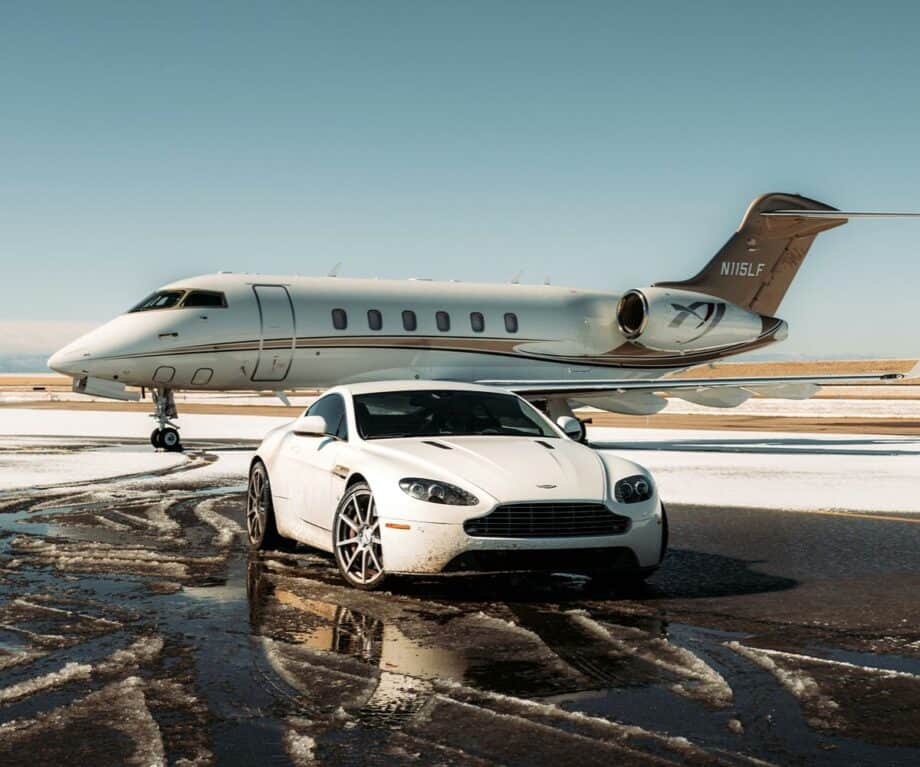
They are buying the connection they did not have to make, the afternoon they did not lose, the airport they did not have to cross and the overnight stay they did not need.
They may be buying the ability to put the children, the dog and the luggage on one aircraft and arrive close to the villa rather than at whichever airport happens to have the best airline schedule.
They may be buying enough time to have breakfast at home, attend a meeting in another country and still be back for dinner.
Or they may simply be buying the freedom to decide that they want to leave at 15.00 rather than at 09.20 because 09.20 happens to be when an airline wants to fly.
That is the part of the economics that is difficult to put into a simple price-per-hour comparison.
Sometimes a €7,000 flight is extravagant.
Sometimes a €15,000 flight solves a problem worth considerably more than €15,000.
Understanding which of those situations you are in is far more useful than knowing the hourly rate of a Gulfstream.

Christoph Lymbersky
Christoph Lymbersky is Founder and CEO of Limitless Sky. Limitless Sky is an independent private aviation booking platform combining instant private jet booking and live charter offers with a 24/7 charter desk, AI-guided empty-leg search, automated route alerts and membership services for frequent private flyers. If you would like to be a guest blogger on A Luxury Travel Blog in order to raise your profile, please contact us.
Did you enjoy this article?
Receive similar content direct to your inbox.
.kadence-form-193324_b35617-ee .kadence-blocks-form-field.kb-submit-field { display: none; }